
NUTRITION · 6 MIN READ
How to Build Muscle & Lose Fat — Without Making Food Your Full-Time Job
What medicine and competitive bodybuilding can teach us about protein, carbohydrates, macros and sustainable body composition.
There is a particular kind of nutrition advice that sounds wonderful on the internet and falls apart the moment you sit down at a Filipino table.
No rice.
No carbohydrates.
Meal-prep everything.
Weigh every gram.
Never eat after a certain hour.
Then someone puts a plate of rice in front of you and says, “Kaon ta.”
And suddenly your twelve-step nutrition protocol has met your grandmother.
The truth is that improving your body composition does not require abandoning Filipino food—or turning eating into a second occupation.
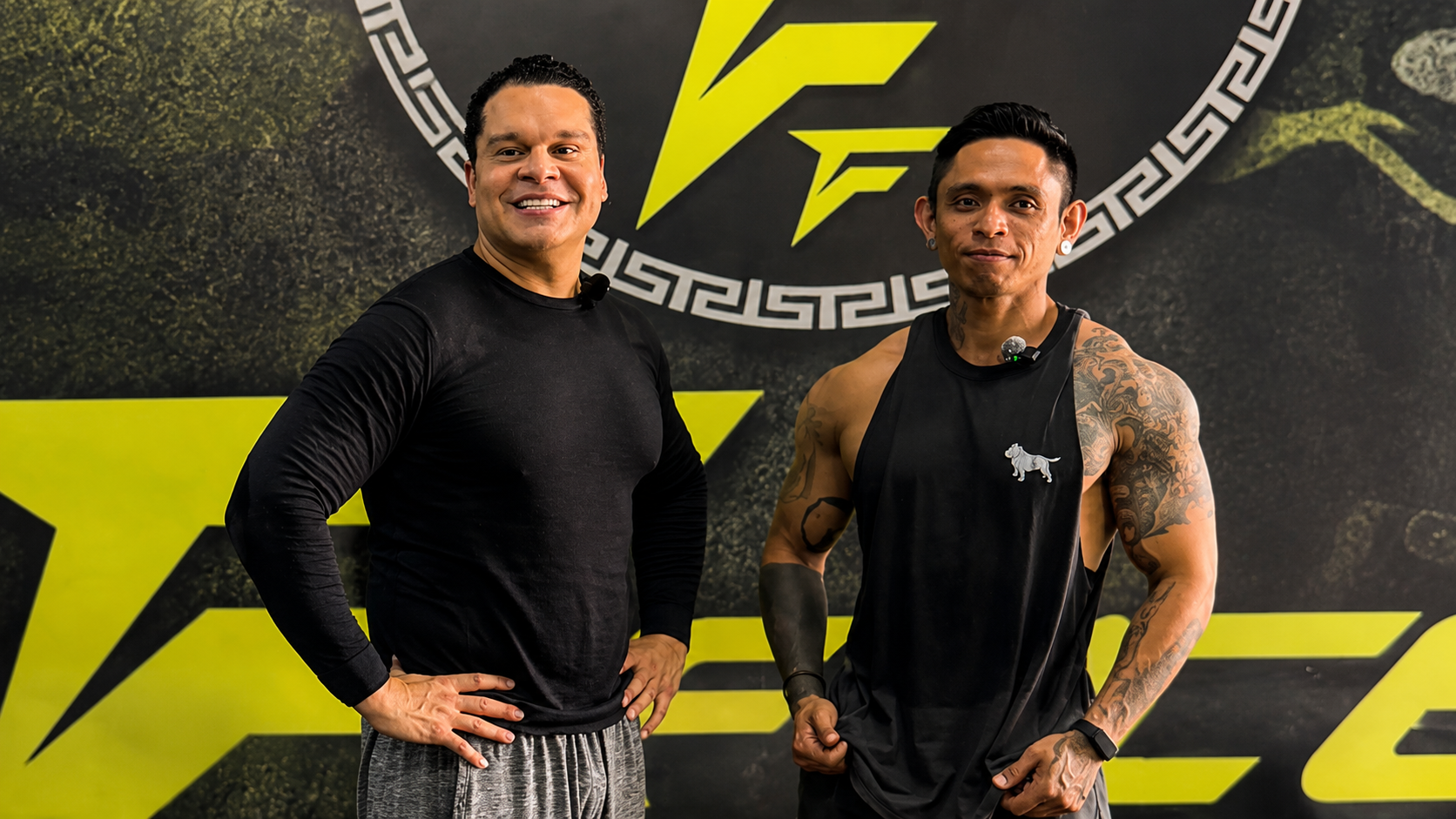
For our conversation on nutrition and body composition, Dr. John Roxborough IV sat down with Cebu-based professional competitive bodybuilder and coach King Ian Villacillo.
Their worlds are different. One approaches weight and metabolic health through medicine; the other has spent years manipulating nutrition and training to build muscle and reduce body fat for competition.
But they agree on something surprisingly simple:
The fundamentals matter more than the tricks.
First, weight loss and fat loss aren’t exactly the same thing.
When someone says, “Gusto ko mo-niwang”—I want to lose weight—the number on the scale tends to become the entire goal.
But your body weight includes much more than body fat.
It includes muscle, water, bone and other tissues. Losing twenty pounds while losing significant muscle along with it is different from losing predominantly body fat while preserving lean mass.
That distinction becomes especially important during significant weight loss.
The goal isn’t necessarily to become as light as possible.
It’s to improve health and body composition while maintaining a body that is strong and functional.
Protein deserves more attention.
A traditional Filipino meal may contain plenty of calories while providing less protein than someone realizes.
Rice can occupy a large part of the plate, accompanied by a relatively small portion of meat or fish. Breakfast might be coffee and pandesal. Merienda might be something sweet or primarily carbohydrate-based.
None of these foods needs to become forbidden.
But if building or preserving muscle is a goal, protein needs a deliberate place in the diet.
That could mean eggs in the morning, fish, chicken, lean meats, tofu, seafood, yogurt or other protein-rich foods appropriate to your preferences and medical needs.
Ian’s world takes protein particularly seriously because muscle is fundamental to bodybuilding.
You don’t have to eat like a bodybuilder.
But there is something useful to learn from one:
Don’t treat protein as an afterthought.
And no, carbohydrates are not automatically the enemy.
Rice may be the most accused food in Filipino nutrition.
“Mao na nakapatambok nimo. Sige man kag rice.”
“That’s why you’re gaining weight. You keep eating rice.”
It’s an appealingly simple explanation.
Human metabolism is more complicated.
Carbohydrates are one of the body’s major energy sources, and physically active people may use them strategically to support training and recovery.
The more useful questions are often:
How much are you eating? What else is on the plate? How active are you? What does your overall diet look like?
Three cups of rice alongside a small amount of protein and few vegetables is nutritionally different from a more balanced meal that still contains rice.
The answer does not have to be walay rice.
Sometimes it is simply less rice, more protein, more vegetables, and greater awareness of the whole meal.
So what exactly are “macros”?
Macros is short for macronutrients.
The three major ones are protein, carbohydrates and fat.
You don’t necessarily need an app and a kitchen scale to benefit from understanding them.
Protein helps provide amino acids the body uses to build and maintain tissues, including muscle.
Carbohydrates provide energy and include foods ranging from rice and fruit to bread and sweets.
Dietary fats also provide energy and are involved in many normal physiological processes.
All three can belong in a healthy diet.
The proportions appropriate for one person may not be appropriate for another.
You cannot out-supplement the basics.
Filipinos are certainly not immune to wellness trends.
Fat burners. Detox teas. Collagen. Protein powders. Peptides. Vitamins. Whatever happens to be viral this month.
Some supplements may have legitimate uses.
None changes the fundamental reality that body composition is strongly influenced by nutrition, physical activity, resistance training, sleep, genetics, medical conditions and consistency over time.
A supplement cannot compensate for a lifestyle that consistently works against your goal.
The bodybuilder’s diet isn’t the goal. His discipline is the lesson.
A competitive bodybuilder preparing for the stage may manipulate calories, macronutrients, training and other variables to achieve a physique that is neither necessary nor realistic for the average person to maintain.
That is not what we’re recommending.
What is useful is the principle underneath it:
Ian does not expect one “healthy” meal to transform his body.
He repeats behaviors.
Again.
And again.
And again.
That may be the least glamorous secret in fitness.
The Estelle Takeaway
You do not have to stop eating Filipino food.
You do not have to fear carbohydrates.
And you certainly do not have to bring a food scale to Sunday lunch with the family.
Start by understanding what’s on your plate.
Prioritize adequate protein. Include plants. Pay attention to portions. Move your body. Resistance-train when appropriate. Sleep. And build habits you can repeat after the initial motivation disappears.
Because the best nutrition plan isn’t the one that looks perfect on Instagram.
It’s the one that still works when someone says:
“Kaon ta.”