
SKIN · 4 MIN READ
Microneedling, Explained: What Is Your Skin Actually Doing?
Tiny controlled injuries can trigger a much larger repair response. We explore the biology behind the treatment and what happens afterward.
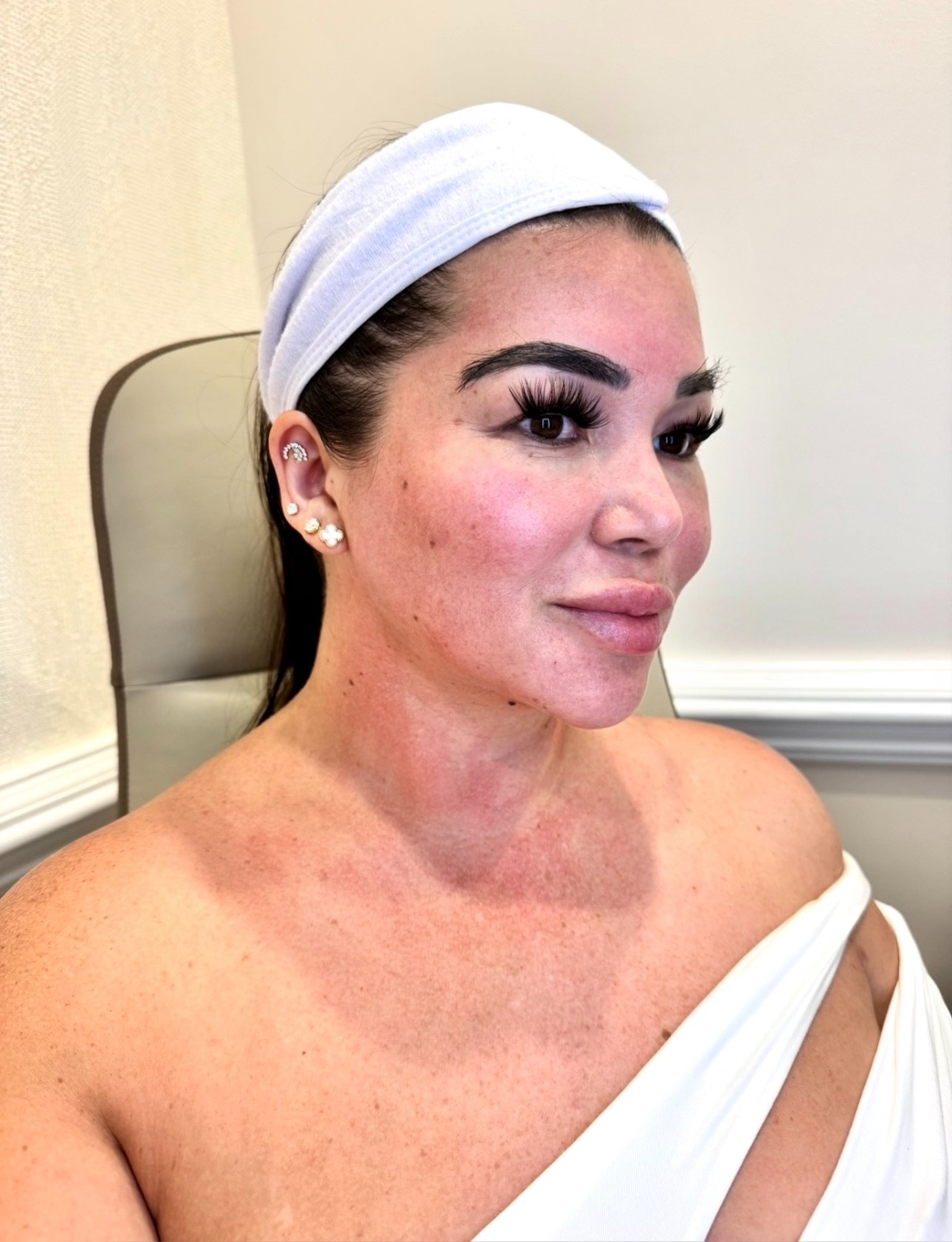
Immediately after microneedling. Temporary redness is an expected part of the skin's response to treatment.
Tiny controlled injuries can initiate a much larger repair response. But between TikTok, home devices and Filipino beauty folklore, microneedling deserves a more careful explanation.
Filipino skincare advice has always had a fascinating mixture of generations in it.
Your dermatologist tells you one thing.
TikTok tells you another.
And somewhere in the background, a tita is warning:
“Ayaw ana. Basin mapasmo ka.”
Don’t do that. You might get pasma.
Depending on the family, you may have grown up hearing about pasma, bughat, panuhot, or the dangers of doing something bugnaw after something init.
These ideas are deeply embedded in many Filipino households.
Modern dermatologic science uses a different framework for understanding what happens after a procedure such as microneedling.
Microneedling deliberately creates an injury.
That sounds alarming until you understand the scale.
A microneedling device uses very small needles to create controlled micro-injuries in the skin.
The point isn’t to damage skin indiscriminately.
The procedure is intended to initiate normal wound-healing processes.
Think of it less as “putting holes in your face” and more as creating a carefully controlled stimulus.
Your skin responds.
Following controlled injury, the body initiates a repair cascade involving cellular signaling and tissue remodeling.
Collagen production and remodeling are part of the reason microneedling is used for concerns such as certain acne scars, skin texture and other appropriate indications.
But biology takes time.
You don’t manufacture mature new collagen by Tuesday because you microneedled on Monday.
Redness doesn’t mean the treatment “worked better.”
This is an important distinction.
In aesthetics, people can become conditioned to equate dramatic treatment with effective treatment.
More redness. More peeling. More bleeding. More pain.
Therefore: better.
Not necessarily.
Treatment parameters should be selected appropriately for the indication, area, device and individual skin.
Aggressive treatment can increase the possibility of unwanted effects.
The goal is an appropriate biological response—not winning a competition for the reddest face.
What about Filipino and other melanin-rich skin?
This deserves particular attention.
Skin with more melanin can respond differently to inflammation, and post-inflammatory hyperpigmentation is an important consideration after skin injury.
That does not automatically mean microneedling is inappropriate.
It means treatment selection, technique, aftercare and patient assessment matter.
This is also why copying someone’s treatment depth from social media isn’t a particularly good treatment plan.
Can I microneedle at home?
Professional microneedling and consumer devices should not automatically be treated as equivalent.
Depth, device quality, sterility, technique and patient selection all matter.
Creating openings in the skin also makes hygiene especially important.
This is one area where “nakita nako sa TikTok”—“I saw it on TikTok”—should probably not be your only credential.
And what about PRP, PDRN and all the add-ons?
Welcome to the rapidly expanding world of regenerative aesthetics.
PRP, platelet-derived products, polynucleotides/PDRN and various topical products are frequently discussed alongside microneedling.
They are not interchangeable, and evidence, regulatory status and appropriate use can differ considerably by product and treatment.
We’ll explore these individually in the Journal rather than putting every fashionable injectable or topical under the vague label of “regenerative.”
What should happen afterward?
Immediately following treatment, the skin may be red, sensitive or irritated.
Aftercare should focus on protecting the treated skin and following the instructions appropriate to the procedure performed.
This is generally not the moment to experiment with five new active ingredients because someone online said they produce “glass skin.”
Your skin has just been intentionally challenged.
Give it an opportunity to recover.
What about pasma?
There is no direct biomedical diagnosis equivalent to the traditional Filipino concept of pasma.
That doesn’t mean someone’s experience of discomfort is imaginary.
Rather, symptoms traditionally grouped under cultural concepts may have different explanations within modern medicine.
You can respect what Lola taught you while still asking what the evidence shows.
Those two conversations don’t need to be disrespectful to one another.
The Estelle Takeaway
Good aesthetics isn’t about doing the most aggressive procedure you can tolerate.
It’s about understanding the tissue you’re treating, choosing an appropriate intervention, and allowing biology enough time to do what biology does.
Your skin doesn’t care what’s trending.
It responds to physiology.